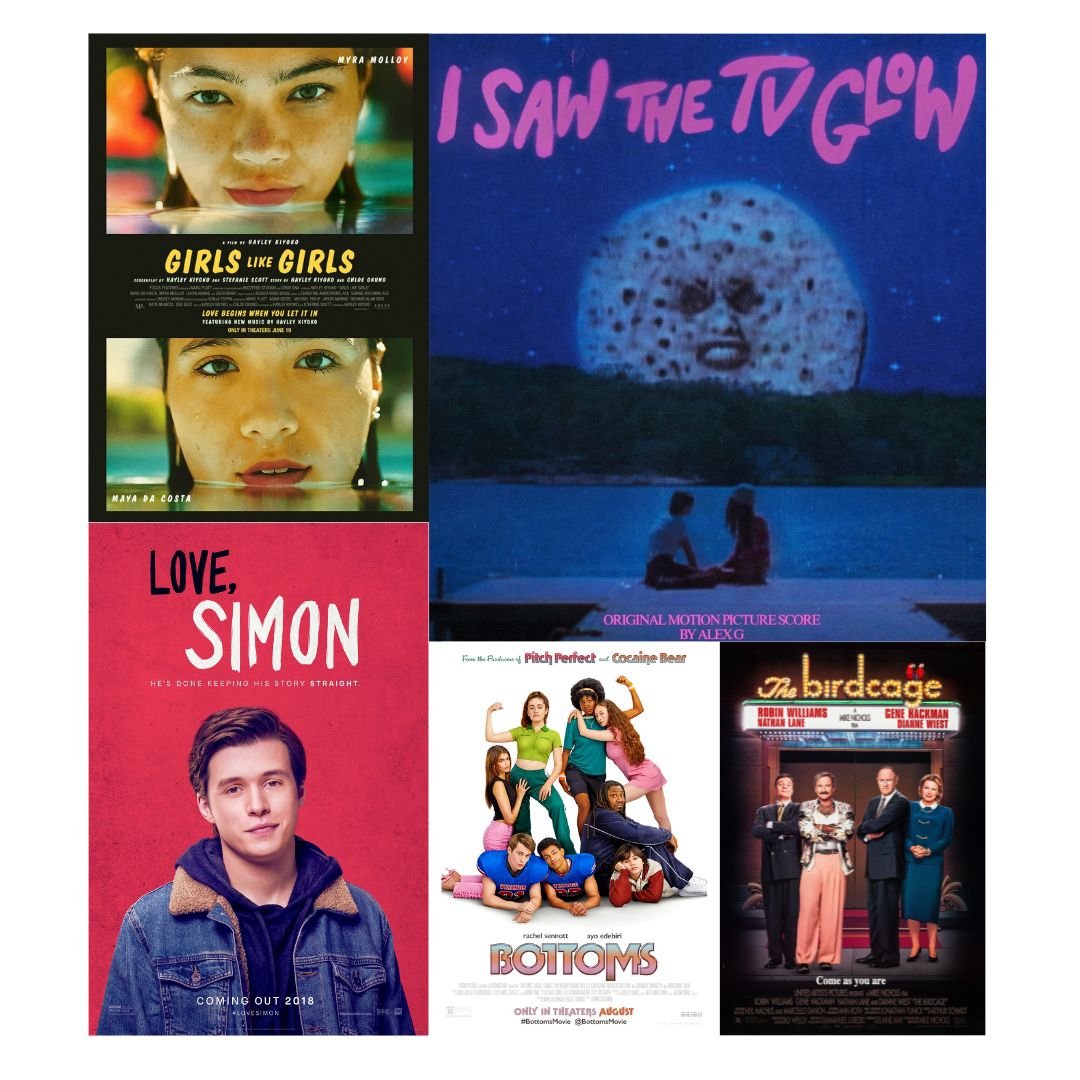
Preface: This is one of the original articles from the Gay Agenda Magazine I created last fall. It is an opinion piece I wrote based on my own observations through the consumption of queer media and movies. Thank you for your time and interest in The Gay Agenda! For more, make sure to follow our socials and keep up to date with all of our posts.
Image Credits: IMDB Images – Girls Like Girls (summer 2026), Love, Simon (2028), Bottoms (2023), I Saw the TV Glow (2024), and The Birdcage (1996)
It isn’t uncommon to watch a movie and see a queer-coded side character who acts as the best friend and guide to the heterosexual main characters. It was a part of the media we watched and was an integral part of the plot, or so many writers seemed to think. However, when you look a little closer, you can start to see the cracks forming in the bias that made this well-known trope loved for so long.
I bet you can think of them; whether the character was out as gay or was just written to be more overtly feminine and perpetually friend-zoned, you can see the pattern start to arise. Queer men have been seen as comic relief in many plotlines involving main characters. Depending on them for life advice and hail-mary love confessions, we really don’t get to see the development of these characters any further than what they can do for the main storyline.
Despite the hate and discrimination that many gay people have experienced, a lot of the time, they are still seen as ‘funny’ characters in film and media. Many homophobic individuals don’t like the idea of same-sex marriage and happy queer people, but they still enjoy the humor of a side character you only see a few times throughout the movie. These characters typically don’t get to have happy endings, and aren’t usually seen with a partner of any kind– and if they do have a relationship, you don’t tend to see the other person on screen.
Along with this, how many movies can you think of in which these characters are anything but gay men? Not many, and that’s for reasons many people don’t fully understand until you think long and hard about it. It appears that gay men have been somewhat more accepted than other queer identities within the LGBTQIA+ community as a whole.
This poses the question, what about gay women or trans people in media? Well, the hard truth is– there aren’t many. Yes, in our contemporary media, we have started to see an emergence of some proper representation; however, it wasn’t always the case.
We tend to see an over-feminisation and flamboyant gay men, but that’s it. We don’t see many queer women who love other women, or those who identify under the transgender umbrella. However, when there is any character that identifies this way, they are typically fetishised and turned into sex symbols. These characters are seen as ‘sexy’, written as flat characters that have nothing real to contribute to the plot other than sex appeal. Not to mention the ‘bury your gays’ trope and the ‘gays can never be happy in the open’ plot lines that appear much too frequently on television.
This has continued to translate into a common trope we see in lots of movie media and formed deeper-seated internalized homophobia for those members of the community. You see, by only showing that some identities are okay, to an extent, and only if you fit the trope shown, you don’t get the chance to fully see the diversity that makes up the queer community. By only showing this, it creates an idea that that’s the only accepted way to be a gay person, and also shows queer women that they aren’t as valid as other identities in the world. And what is that going to show trans people who don’t get to see a single trans person in any form of media they consume?
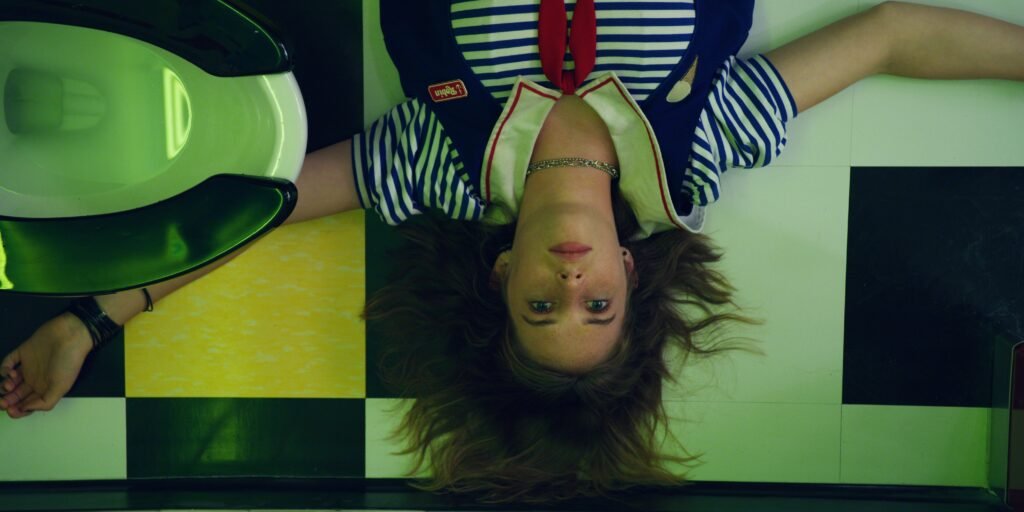
Even though season five was sub-par, nothing will top this iconic coming out scene between Maya Hawke’s Robin Buckley and Joe Keery’s Steve Harrington back in 2019 during Stranger Things Season Three
Luckily, there has been a shift as of late, with more identities being properly represented in movies and TV. Yet, this comes with the backlash from those who don’t support the queer community, or only support certain aspects of it that don’t include all the letters of the acronym.
New shows with queer stories are being put into the main plots of shows, with queer people who actually represent real people with well-rounded character descriptions. These people range from main characters to best friends or coworkers, same-sex parents or couples, trans people, and nonbinary individuals, all taking on the big screens. Yet, with great leaps comes hard pushback. Now, with people claiming there are now too many LGBTQIA+ people in media, that it’s being overdone, or that it’s not important to the plot of a show for a character to be out and proud.
It’s an interesting argument when previously we only saw heterosexual led films and very few queer side-characters, or even purposeful bad endings for those who identify as anything other than straight (specifically in the horror genres). It’s a double standard to be okay with a rom-com following a straight couple and that being fine, and then hating on a film that mentions one time that the protagonist is queer (but doesn’t even focus on sexuality). No, the real crime is the homophobia LGBTQ+ people have had to endure for so long in movies and the media.
Real representation isn’t always the focus on sexuality or gender identity in the shows and movies. It’s having characters that are queer, but showing that they are just people too. Being gay isn’t always the main thing, and doesn’t have to always be the coming-of-age film that we typically see queer movies doing. Those movies are great, and will be inspirational to those who watch them and relate, but there are other ways to find the proper representation the queer community craves. Having queer characters and showing that they are so much more than just queer is a large part of this. Breaking the norms and stereotypes is a battle we haven’t yet won, but by knowing the past and learning from it, is exactly what we can do to better the representation we know in the things we love.
Queer people are people, just like everyone else, so let’s not focus on the gay best friend stereotype any longer. Let’s let go of the misogynistic idea that lesbian relationships are ‘hot’, and see them for who they really are– people. Trans lives, queer lives, gay lives, they all matter, so for once let’s represent them the way they would want to be represented.
If you’re interested in finding media that does the right things for representation, then see the article we did on the best movies and TV shows to watch for proper queer representation!

The Gay Agenda
